


(Paper rectangles)
,

The New America Foundation has received more than $21 million from Google; its parent company’s executive chairman, Eric Schmidt; and his family’s foundation since the think tank’s founding in 1999. That money helped to establish New America as an elite voice in policy debates on the American left.
But not long after one of New America’s scholars posted a statement on the think tank’s website praising the European Union’s penalty against Google, Mr. Schmidt, who had been chairman of New America until 2016, communicated his displeasure with the statement to the group’s president, Anne-Marie Slaughter, according to the scholar.
Definition of parage
plural -s
: equality of condition, blood, or dignity


18MR.org was founded to promote AAPI civic engagement, influence, and movement by leveraging the power of technology and social media. For the past three years, we’ve convened a network of creative, tech-savvy, and passionate individuals and organizations working in and with AAPI communities in every U.S. state and territory. Our vision of engaged AAPI communities began with, but doesn’t end with, the ballot box: it also includes year-round civic activity locally and nationally, holding corporations accountable, building interracial coalitions, and developing our shared identities.







It turns out that racial resentment was the strongest predictor of whether a voter would flip from supporting a thoughtful, intelligent Democrat to a boorish, mentally unstable Republican. When you say Black Lives Matter, these white voters hear Kill a Cop. When you say diversity in the workplace, they hear special privileges for minorities at the expense of whites.
http://software-carpentry.org/ is the workshop thing
A Pivotal Moment: Developing a New Generation of Technologists for the Public Interest - Freedman Consulting, LLC
(Freedman Consulting, LLC) This report, developed with support from the NetGain partnership, draws on 60 interviews with field experts, scholars, and policy leaders to identify opportunities to improve technology capacity and talent of those working on behalf of the public interest. The interventions described in the report may be implemented by a variety of stakeholders and target a diverse set of elements of public interest technology. Check out pivotal moment
Software Carpentry
Teaching researchers the foundational computing skills they need to get more done in less time


My friend runs the Asheville Blade which is an independent investigative online newspaper funded by Patreon http://ashevilleblade.com/
You can write a tragedy in six words, that's pretty cool. I can write a dystopian future in one URL: http://Facebook.gov
How did openness become a foundational value for the networks of the twenty-first century? Open Standards and the Digital Age answers this question through an interdisciplinary history of information networks that pays close attention to the politics of standardization. For much of the twentieth century, information networks such as the monopoly Bell System and the American military’s Arpanet were closed systems subject to centralized control. In the 1970s and 1980s, however, engineers in the United States and Europe experimented with design strategies to create new digital networks. In the process, they embraced discourses of “openness” to describe their ideological commitments to entrepreneurship, technological innovation, and participatory democracy. The rhetoric of openness has flourished – for example, in movements for open government, open source software, and open access publishing – but such rhetoric also obscures the ways the Internet and other “open” systems still depend heavily on hierarchical forms of control.
They get money from YouTube on a per "thing" basis, and I wonder how much of the market is artists using Pateron as one income stream among many. Comic strip writers, for example, also run ads and bundle comics into books. So maybe not much money to divvy, but a welcome addition.
Whatever the case, I look forward to future papers on this. I'm interested in seeing how this develops.

(Screen Shot 2017-08-31 at 12.11.14 PM.png)
,


(This was the map of advertised gig - See North Dakota)
,


(Screen Shot 2017-08-31 at 4.52.48 PM.png)
,

(Image uploaded from iOS)
,










Donald J. Trump has managed to become the Republican nominee for president, Why? How? There are various theories: People are angry and he speaks to their anger. People don’t think much of Congress and want a non-politician. Both may be true. But why? What are the details? And Why Trump?
He seems to have come out of nowhere. His positions on issues don’t fit a common mold.
He has said nice things about LGBTQ folks, which is not standard Republican talk. Republicans hate eminent domain (the taking of private property by the government) and support corporate outsourcing for the sake of profit, but he has the opposite views on both. He is not religious and scorns religious practices, yet the Evangelicals (that is, the white Evangelicals) love him. He thinks health insurance and pharmaceutical companies, as well as military contractors, are making too much profit and wants to change that. He insults major voting groups, e.g., Latinos, when most Republicans are trying to court them. He wants to deport 11 million immigrants without papers and thinks he can. He wants to stop Muslims from entering the country. What is going on?
The answer requires a bit of background.
In the 1900’s, as part of my research in the cognitive and brain sciences, I undertook to answer a question in my field: How do the various policy positions of conservatives and progressives hang together? Take conservatism: What does being against abortion have to do with being for owning guns? What does owning guns have to do with denying the reality of global warming? How does being anti-government fit with wanting a stronger military? How can you be pro-life and for the death penalty? Progressives have the opposite views. How do their views hang together?
The answer came from a realization that we tend to understand the nation metaphorically in family terms: We have founding fathers. We send our sons and daughters to war. We have homeland security. The conservative and progressive worldviews dividing our country can most readily be understood in terms of moral worldviews that are encapsulated in two very different common forms of family life: The Nurturant Parent family (progressive) and the Strict Father family (conservative).
What do social issues and the politics have to do with the family? We are first governed in our families, and so we grow up understanding governing institutions in terms of the governing systems of families.
In the strict father family, father knows best. He knows right from wrong and has the ultimate authority to make sure his children and his spouse do what he says, which is taken to be what is right. Many conservative spouses accept this worldview, uphold the father’s authority, and are strict in those realms of family life that they are in charge of. When his children disobey, it is his moral duty to punish them painfully enough so that, to avoid punishment, they will obey him (do what is right) and not just do what feels good. Through physical discipline they are supposed to become disciplined, internally strong, and able to prosper in the external world. What if they don’t prosper? That means they are not disciplined, and therefore cannot be moral, and so deserve their poverty. This reasoning shows up in conservative politics in which the poor are seen as lazy and undeserving, and the rich as deserving their wealth. Responsibility is thus taken to be personal responsibility not social responsibility. What you become is only up to you; society has nothing to do with it. You are responsible for yourself, not for others — who are responsible for themselves.
Winning and Insulting
As the legendary Green Bay Packers coach, Vince Lombardi, said,
“Winning isn’t everything. It’s the only thing.” In a world governed by personal responsibility and discipline, those who win deserve to win. Why does Donald Trump publicly insult other candidates and political leaders mercilessly? Quite simply, because he knows he can win an onstage TV insult game. In strict conservative eyes, that makes him a formidable winning candidate who deserves to be a winning candidate. Electoral competition is seen as a battle. Insults that stick are seen as victories — deserved victories.
Consider Trump’s statement that John McCain is not a war hero. The reasoning: McCain got shot down. Heroes are winners. They defeat big bad guys. They don’t get shot down. People who get shot down, beaten up, and stuck in a cage are losers, not winners.
The Moral Hierarchy
The strict father logic extends further. The basic idea is that authority is justified by morality (the strict father version), and that, in a well-ordered world, there should be (and traditionally has been) a moral hierarchy in which those who have traditionally dominated should dominate. The hierarchy is: God above Man, Man above Nature, The Disciplined (Strong) above the Undisciplined (Weak), The Rich above the Poor, Employers above Employees, Adults above Children, Western culture above other cultures, America above other countries. The hierarchy extends to: Men above women, Whites above Nonwhites, Christians above nonChristians, Straights above Gays.
We see these tendencies in most of the Republican presidential candidates, as well as in Trump, and on the whole, conservative policies flow from the strict father worldview and this hierarchy
Family-based moral worldviews run deep. Since people want to see themselves as doing right not wrong, moral worldviews tend to be part of self-definition — who you most deeply are. And thus your moral worldview defines for you what the world should be like. When it isn’t that way, one can become frustrated and angry.
There is a certain amount of wiggle room in the strict father worldview and there are important variations. A major split is among (1) white Evangelical Christians, (2) laissez-fair free market conservatives, and (3) pragmatic conservatives who are not bound by evangelical beliefs.
White Evangelicals
Those whites who have a strict father personal worldview and who are religious tend toward Evangelical Christianity, since God, in Evangelical Christianity, is the Ultimate Strict Father: You follow His commandments and you go to heaven; you defy His commandments and you burn in hell for all eternity. If you are a sinner and want to go to heaven, you can be ‘born again” by declaring your fealty by choosing His son, Jesus Christ, as your personal …
https://www.fcc.gov/restoring-internet-freedom
Restoring Internet Freedom
The FCC has proposed to return the U.S. to the bipartisan, light-touch regulatory framework under which a free and open Internet flourished for almost 20 years. The FCC's May 2017 proposal to roll back the prior Administration's heavy-handed Internet regulation strives to advance the FCC's critical work to promote broadband deployment in rural America and infrastructure investment throughout the nation, to brighten the future of innovation both within networks and at their edge, and to close the digital divide.
Consolidated Revenue Increased 9.8%; Net Income Attributable to Comcast Increased 23.9%; Adjusted EBITDA Increased 10.0%
Net Cash Provided by Operating Activities was $5.2 Billion; Free Cash Flow was $2.2 Billion
Earnings per Share Increased 26.8% to $0.52
Dividends Paid Totaled $747 Million and Share Repurchases were $1.4 Billion
Cable Communications 2nd Quarter 2017 Highlights:
Cable Communications Revenue Increased 5.5% and Adjusted EBITDA Increased 5.4%
Customer Relationships Increased by 114,000; Total Revenue per Customer Relationship Increased 2.2%
High-Speed Internet Residential Revenue Increased 9.2%; Total Customers Increased by 175,000
Video Residential Revenue Increased 3.9% and 55% of Residential Video Customers Now Have X1; Total Customer Net Losses were 34,000
Business Services Revenue Increased 12.6%, Over $6.0 Billion in Annualized Revenue
Don't Miss: This brilliant Apple Watch accessory puts a wireless charger in your pocket
A study by Maplight, spotted by DSLReports, claims that “Comcast, AT&T, Verizon and the National Cable & Telecommunications Association (NCTA) have spent $572 million on attempts to influence the FCC and other government agencies since 2008.” To put that in perspective, that’s more money spent on lobbying than the defense, automotive, or banking industries over the same period. Only the pharmaceutical and oil industries have consistently spent more.
The money is being spent to fight what ISPs see as an existential threat to their business models: net neutrality. The key idea behind net neutrality is that all data travelling over an ISP’s network must be treated the same. It prevents ISPs from blocking or favoring one type of traffic over another, something that’s absolutely critical to the open and fair internet that we enjoy right now.
Internet service providers ensuring a fair and open internet might sound like a no-brainer, but it makes more sense when you consider exactly the kind of companies that are providing your internet. The internet service companies lobbying hardest against net neutrality are also major cable TV providers — and in most cases, also own the networks that produce the content.
Pay TV has been a big profit-driver for years, but a well-documented change in the way people consume their moving pictures (hint: Netflix!) is driving more people to cut the cord than ever. Even though the pay TV companies are slowly changing with the times and offering streaming TV services, a completely fair and open internet actually runs counter to their interests.
As it stands currently with cable TV, most consumers don’t have a choice. If you want a cable TV package, you buy it from whichever provider offers in your network. The majority of customers can’t shop around, simply because they don’t have any options.
Those regional monopolies (and associated lack of competition) are threatened by streaming TV services. The beauty of an internet-delivered TV package is that (in theory!) it works anywhere in the country. YouTube and Netflix simply don’t have regional blackouts, and the big telecoms companies are worried that the same thing is about to happen to pay TV.
So, it stands to reason that they’d use the last weapon at their disposal to fight back against internet streaming plans: control of the internet itself. Right now, the abuse of power is subtle — things like Verizon and AT&T not counting data used to stream their own TV plans against the cap. In the future, it could be far more blatant: imagine your ISP charging you extra per month to access Netflix and YouTube.
That’s the nightmare that the internet is holding a day of protest against today. That’s the future that ISPs have invested half a billion dollars to build. You pick the side.



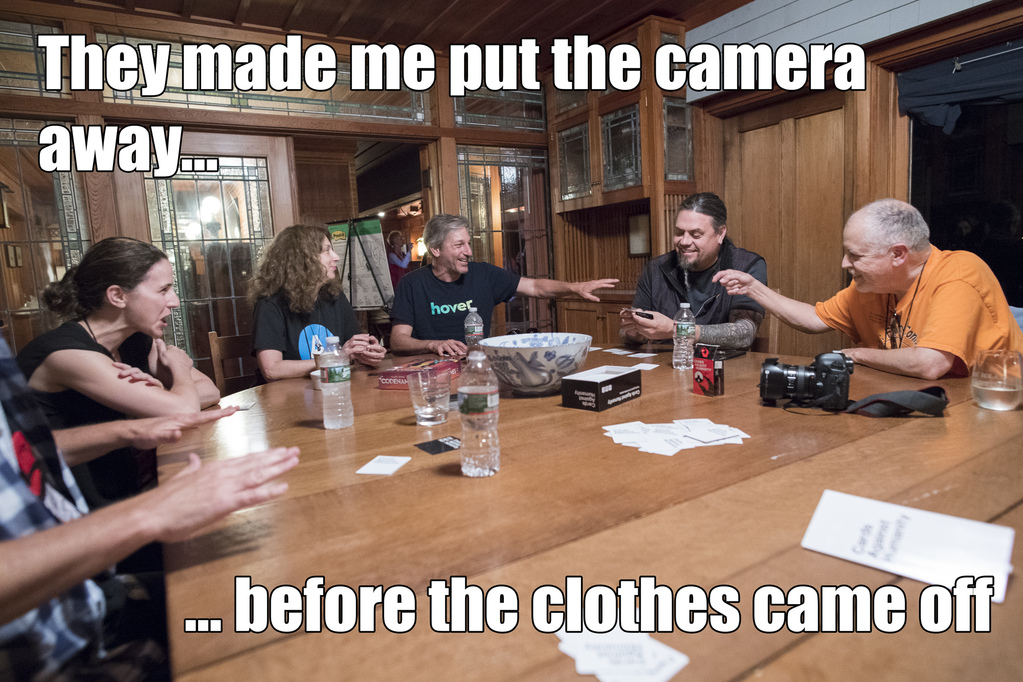
this is a bus. Lyft invented a bus. Lyft shuttle is a bus.
— Jules N. Binoculars (@surfbordt) June 19, 2017
While Uber made its name with private rides, Lyft has always had one eye on mass transportation. Years before they started Lyft, co-founders Logan Green and John Zimmer built Zimride, a carpooling service for undergraduates. They sold Zimride to rental car company Enterprise for an undisclosed amount in July 2013, around the same time that Lyft, still sporting pink mustaches on every car, celebrated its first birthday.
Quartz spoke to Lyft director of transportation Emily Castor this week about its work on Shuttle and public transit in general. We didn’t hesitate to ask the tough question: Is Lyft Shuttle a bus? The following interview has been condensed and edited for clarity.
Quartz: Lyft has experimented with a bunch of different pooled or transit-like products. What was the predecessor to Shuttle?
Current Lyft shuttle routes in Chicago. (Lyft)Castor: This is quite different, I guess, than anything else we’ve done. You could certainly say that it descended from Lyft Line, which we continue to operate.1 You might also be thinking of Lyft Carpool, which was quite different.2 There’s always experimentation happening at Lyft with different flavors of ways to match people up with rides. Carpool was more focused on commuters and casual carpooling drivers, and Lyft Shuttle is more similar to Lyft Line.
Shuttle is really motivated by the desire to create the most streamlined efficient commute experience possible and to attract more people to carpool on their way to work. If you look at commuting in this country right now, it’s a pretty sad picture. Seventy-six percent of people drive to work alone. Something is fundamentally broken in that system. A big part of that is the fact that transit has had a very limited set of tools for a long time. You either had 40-foot buses or you had trains, or a couple variations on those. But there were certain environments where neither of those was going to be able to deliver the convenience and the travel time that people wanted, and so you end up with the vast majority of American commuters opting out of public transit.
Shuttle was skewered on social media for being a bus. Why don’t you consider it one?
What we’re seeing right now is that there’s an emergence of a huge variety of microtransit services that are different ways of creating high-occupancy rides. Chariot, Via3—I don’t want to name-drop a lot of other brands—there’s an explosion of a variety of services that are using their creativity and the new potential that’s created by smartphones and GPS and finding ways to match people up with different types of vehicles on different types of service delivery patterns to try to attract marketshare away from people who own their own cars.
These are not heavy-duty vehicles. They’re standard passenger cars that people own that are already operating on the Lyft platform.4 That means they’re not giving Shuttle rides unless there is demand for one, which I think is one of the key features of Shuttle. One of the big problems that transit services face is that it’s really expensive for them to just have a driver running a route all the time, especially if they don’t have enough riders to fill up that bus. It greatly improves the financial viability of offering that service if you only have to offer it when somebody needs it. That’s how Shuttle operates. It’s very efficient in only providing service when it’s required.
Do you see yourselves as a complement to public transit?
Absolutely. In some cases, a part of public transit. We want to have an open dialogue with those transit agencies so that we know where we can be the most helpful. For example, if you look at the Shuttle routes in Chicago, you’ll see there’s a route that goes down through Brighton Park, which is a low-income, underserved community that actually lacks a good transit connection into downtown, where most of the jobs are. Shuttle is really a product that’s allowing us to test out where Lyft can be the most helpful. We felt that was an area where people do need help with improving mobility access.
It’s frankly happening all over the country. In the last couple of years, this conversation has developed very very quickly. As soon as Lyft started to become a permanent fixture of the transportation ecosystems in these places, I started to have conversations with transit agencies and it very quickly turned into this kind of creative brainstorming about how can we actually use these new products to become part of the way the transit agencies operate, and tackle some of those really hard use-cases that they haven’t been able to do in the past.
Paratransit is a service that transit agencies are mandated to provide to individuals with disabilities. It’s very challenging, and yet those communities are the ones in the greatest need of mobility access. Transit agencies have had a difficult time providing that on a cost-effective basis in the past. It can be $60 a ride, per person. Those are prime categories of transit service where there is a shared interest both from the riders, who depend on that service, and from the transit agencies, who need to find a more sustainable way of offering that service and to actually expand the amount of service that they provide, to partner with a system like Lyft.
Do you feel like Lyft has an advantage in talking to cities over Uber because you’ve positioned yourselves as the friendlier, more collaborative of the two big companies?
Lyft’s culture and our values have always been a key part of our success, and that’s true now more than ever.
Read next: Why it matters that Uber and Lyft are becoming more like public transit